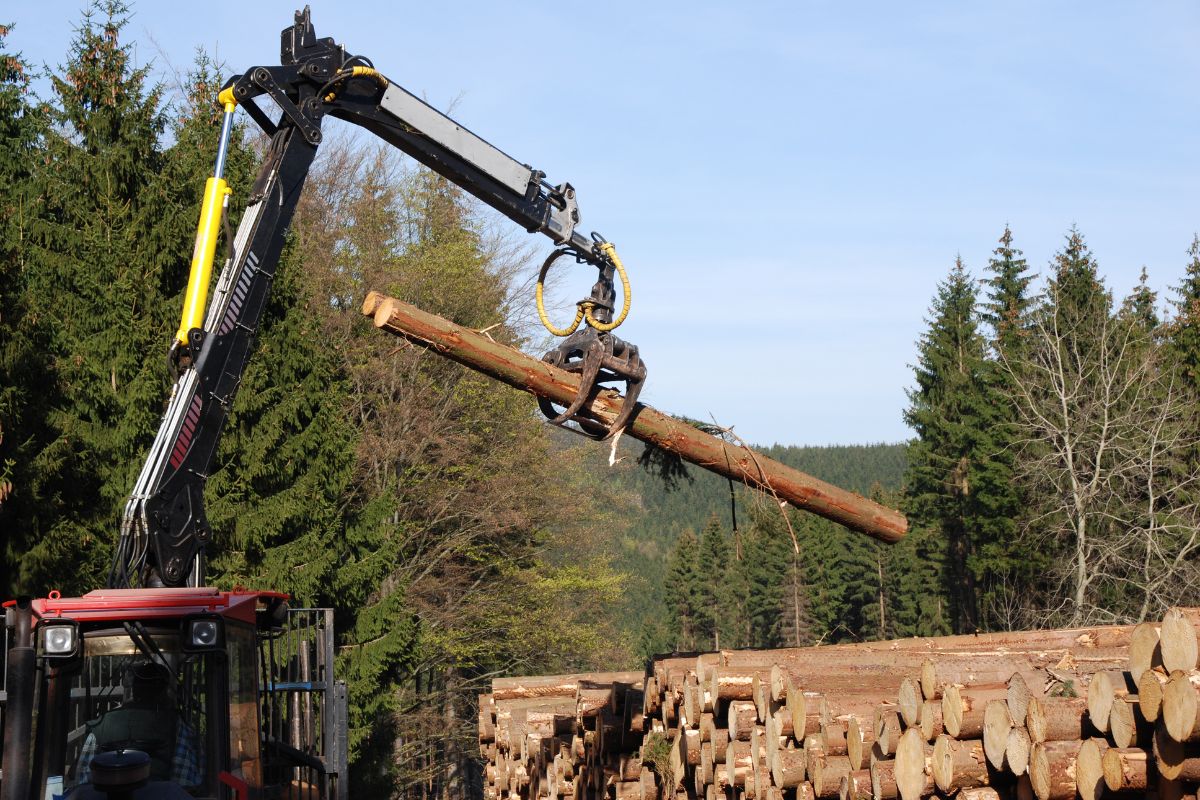

Read more about the article History of the Australian Forestry Industry
Stuart Lindenmayer, CC BY-SA 4.0 , via Wikimedia Commons

History of the Australian Forestry Industry

Australia is a massive country continent with an understandably very complex forested landscape filled with varied and unique ecosystems. To put that into numbers, there are a total of 143 million hectares of Australian forests that cover around 17% of the overall land area of the country. That’s about 3% of the forest areas of the world combined and the 7th largest among countries worldwide. To break down this forested landscape, these enormous forests are comprised of 132 million hectares of native forests, 1.95 million hectares belonging to commercial plantations, and 0.47 million hectares assigned to agro-forests and non-commercial planted forests. But despite these staggering numbers, Australia still imports about a third of its forest product needs, which translates to around $3.5 billion worth of something that it can actually produce itself. So, why? How Did Australian Forestry Begin? Forests are abundant with products, benefits, and values to people and the world, and forestry ensures that they are fostered sustainably and wisely. The development of Australian forestry has gone a long way from 1788 when the first settlement by Europeans has been documented. There's much more to Australian forestry than just machinery and parts! The state government retained authority over and responsibility for the forests under their jurisdiction in 1901 at a political federation. However, it has given up this power at Federation and from then, it has allowed the Commonwealth government to expand its influence over the entire forestry sector. This in turn has complicated what should have been a very straightforward history of Australian forestry. Before the 1960s, not a lot of people were interested in forestry except those who worked in forest-based activities and industries. This mindset dragged on for quite a while until the wave of concern regarding environmental conservation began to form and people began taking interest in forestry and its management. 1960s Softwood Agreements During this decade, Australia’s plantation estate has expanded significantly as a result of collective efforts between the Australian Government and State and Territory Governments. The Australian government agreed to the States’ strategies in establishing more plantations to counterbalance the anticipated shortages and find other markets for the unsaleable trees in order for the forests to be able to regenerate.  This resulted in a significant increase in the rate of plantation from the 1960s to the 1980s. As expected, this significantly contributed to the country’s timber and wood-product output. 1992 National Forest Policy Statement During this year, the Australian government, together with five States and two Territories came to an agreement to the National Forest Policy Statement. Eventually, the Tasmanian government also agreed to the same, which secured the agreement of all of Australia’s State and Territory governments. This statement “describes a process of consultation and cooperation designed to protect Australia’s natural and cultural heritage in the context of conservation and development initiatives.” Under this, the governments contribute their visions in managing the forestry of Australia. Some of these visions include increasing forested land, private forests’ management being in close coordination…
Continue ReadingHistory of the Australian Forestry Industry

Top Forestry Organisations and Companies in Australia

Forestry is a sum of a lot of things being practised in natural and planted forests, whether public or private, that has positive effects on the maintenance and protection of the resources within its jurisdiction and the people within the community. It creates and protects in such a way that the forest flourishes, capable of supporting products and resources, wildlife, and livelihood, as well as providing a sustainable and renewable future, most especially in the midst of a changing climate that poses threats to our natural resources. And since not a single person can do these things alone, a collective effort is necessary to be able to achieve the desired common goal. Hence, forestry organisations and companies are a crucial piece of the puzzle and have been during the long history of forestry in Australia. Farmers, forest professionals, scientists, educators, and the likes make up these organisations and companies and they manage, repair, protect, and conserve forests that benefit the environment and the community. Government Forest Agencies Australian Bureau of Agricultural and Resource Economics and Sciences The ABARES is the Department of Agriculture, Fisheries and Forestry’s (DAFF's) science and economics research division. It provides world-class and professionally independent research, analysis, and advice for decision-makers in both government and public sectors about anything related to the country’s forestry, agriculture, and fisheries industries. DAFF has offices in many locations across Australia, including Brisbane, Adelaide and Darwin to name a few. My good mate Dom who does the best pressure cleaning Bundaberg has to offer, says there is even in a DAFF office in his home town. Its objectives include supporting policy-making that is evidence-based through providing research that is relevant to its policies and advising decision-makers about the challenges that the industry is currently facing and will face in the years to come. It also aims at promoting the findings in its websites, conferences, and other forms of media that the stakeholders’ needs, as well as developing and managing their manpower, processes, and the systems themselves, among others. Commonwealth Scientific and Industrial Research Organisation The CSIRO is the national science agency of Australia. Its purpose is to solve the greatest challenges of the country and improve the lives of its citizens and residents through innovative science and technology. These challenges include food quality and security, health and wellbeing, sustainable resources and energy, resilient and valuable environments, and development of future industries,   It started in 1916 as the Advisory Council of Science and Industry and has since provided a wide range of inventions that have positively impacted people’s lives not just in Australia but all around the world. Among these innovations include Aerogard, the CSIRO Total Wellbeing Diet, polymer banknotes, and even faster WiFi, among others. Department of Agriculture, Fisheries and Forestry This department aims to enhance Australia’s agricultural, forestry, and fisheries trade and industries, as well as manage any threat to the biosecurity of the country in order to protect its million-dollar value. It also aims to maintain the existing opportunities for…

Continue ReadingTop Forestry Organisations and Companies in Australia

Forestry Machinery Parts: Top Brands and Where to Buy

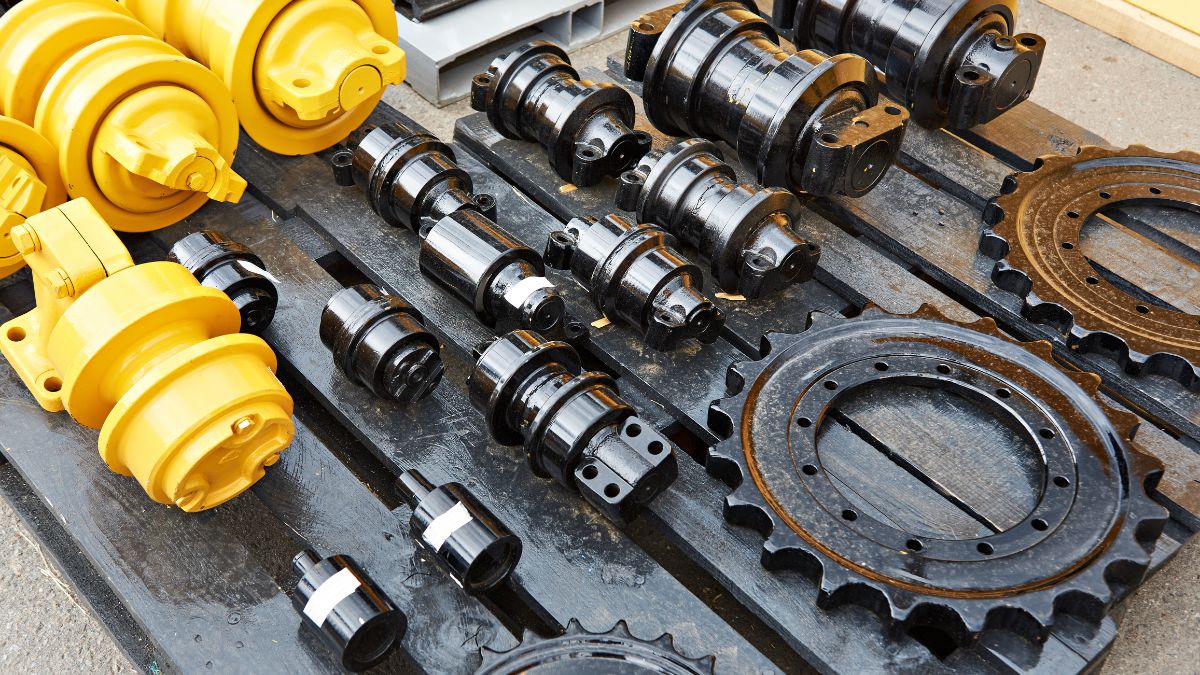
Forestry machinery and equipment have a very significant role in the forestry industries as they are very useful in clearing and logging processes, as well as in conservation and management. Understandably so since they are made to handle the heaviest tasks, especially in the wilderness where the environments can be very rugged. While these beasts are designed to weather against the toughest and the most demanding jobs, all different types of forestry machinery are not immune to wear and tear and breakdown. Hence, it is crucial to familiarise and understand their attachments, parts, and accessories, as well as the brands to be able to use them properly to get the desired result and to be safe at all times. You should also be able to know where these machines and parts can be sourced in case they encountered a breakdown or some parts were damaged and needed replacements. Forestry Equipment Attachments Forestry Mulchers Mulchers are responsible for clearing land by turning vegetation into mulch from grinding trees and bushes. They can be mounted on different equipment such as tractors, skid steer loaders, or excavators, which makes them more efficient and flexible. Logging Equipment The three most important logging equipment out there are the feller bunchers, log loaders, and skidders.  Feller bunchers are for cutting trees and also gathering logs for trouble-free transportation. They are equipped with a cutting head which is a chainsaw attached to an arm. Log loaders take care of loading and unloading materials. They are equipped with grapples that tackle logs, which makes transporting them way easier. Skidders handle the jobs in between which is transporting these logs from the cutting area to the loading section. These attachments have many configurations depending on the specific need, but they are all designed to carry or drag logs to where they intend to be. Top Brands The top brands for forestry machines and equipment are as follows: Barko Hydraulics, LLC Established in 1963 and the headquarters is located in Wisconsin, USA, Barko Hydraulics manufactures heavy equipment for forestry, material handling, and site preparation. Its premium fleet includes industrial wheeled tractors, knuckleboom loaders, rough terrain carrier loaders, stationary electric loaders, the advanced line-up of harvesters, and feller bunchers, among others. Caterpillar Inc. Caterpillar Inc. was founded in 1925 and has headquarters in Texas, USA. It is considered one of the biggest companies in terms of manufacturing construction and mining equipment, diesel-electric locomotives, industrial gas turbines, natural gas engines and off-highway diesel, and many others. They also make top-quality machines for demolition contractors Las Vegas NV to provide the best wrecking, concrete removal and excavation services. Deere & Company With a base in Illinois, USA, John Deere was established in 1837, with a portfolio that includes 25 brands that provide ingenious solutions for a wide variety of end-user sectors. Its equipment boasts to have intelligent applications and technology so advanced that it intends to revolutionise both the agricultural and construction sectors.  Hitachi Construction Machinery Co., Ltd. A well-known Japanese brand based…

Continue ReadingForestry Machinery Parts: Top Brands and Where to Buy

Types of Forestry Equipment

It's no wonder that there are so many forestry organisations in Australia - forests are vast and so are very challenging to manage, maintain, or convert. Because of this, forestry equipment is very much a necessity in this kind of operation. But what exactly are they and what types are a must to get the job done? Forestry equipment is any tool, whether heavy or light, that is necessary for managing, converting, or upkeeping the forests so that they can serve their intended purpose. These machines ideally have advanced automation and are remote-controlled, which make them safer and more efficient to use. These features also make them more feasible for forestry professionals to meet the ever-growing demands for forest products, while taking advantage of their safety features helps in protecting and preserving these resources. Common Forestry Equipment Forwarders Forwarders are basically tractors that can have up to eight wheels that pull a wagon loaded with wood. They are articulated machines that have a cab for the operator and a bunk where the logs are stuffed. A lot of these forwarders have a grapple mounted on their boom that is used for loading and unloading different materials. Their cab can either be fixed or can be rotated on the chassis. You can also increase their floatation and traction through additional tracks that can slide on over their dual wheels or you can just opt for wider tiles for more convenience. If there is plenty of mud or snow, tire chains are another option. Believe me, it takes a very skilled pressure cleaning specialist to clean the mud off those. Harvesters and Harvester Heads Harvesters are one of the heavy vehicles in forestry mostly used for felling or cutting down, delimbing, and bucking trees. They usually work hand in hand with forwarders which are used for hauling logs. Harvester heads are comprised of a chain saw for cutting trees at the base and to their desired length, two or more delimbing knives that can reach around the truck to eliminate the branches, two or more rollers to hold the trees firmly, diameter sensors used to calculate the volume of the harvested timber, and a measuring wheel to get the actual length of the stem that goes through the head. There are three categories of harvester heads and these are the following: Bunching heads – these are attached to feller bunchers and are used to hold more than one stem all at the same time while cutting. They utilised three cutting methods, namely bar saw, disc saw, and shear.  Processing heads – as the name suggests, these attachments are used to perform some processing on the stems, apart from felling trees. Some of these include delimbing and bucking stems and turning them into logs, otherwise known as a cut-to-length system. Felling heads – these are grapples that come with a bar saw that is perpendicularly attached to them. These are used for cutting trees while controlling the direction in which the tree falls.…

Continue ReadingTypes of Forestry Equipment